Friday, January 20, 2023

Indirect but Serious Pain

 By abolishing a number of taxes and simplifying the tax structure, Goods and Services Tax, GST had promised to reduce our tax burden and result in fall in prices. We knew that it has so far failed to do both (also failed to significantly boost government revenue), but to what extent it has contributed to widening the inequality gap? A recent analysis of NSSO data by Oxfam presents quite a shocking picture: almost two-third of the total GST collection is coming from the bottom 50 per cent Indians, one-third from middle 40 per cent and just three to four per cent from the top 10 per cent. And in terms of household budgets, the impact of a high indirect tax regime is quite devastating - the bottom 50 per cent of the population pays six times more on indirect taxation as a percentage of income compared to top 10 per cent.

 We have argued in Countdown that contrary to popular belief and government statements, we Indians are heavily taxed and an increasing reliance on indirect tax is extremely unfair to poor. If they buy the same product or service, then all consumers from Mukesh Ambani to a landless labourer pay the same amount of GST without any relation to their income. Most developed countries thus impose high direct tax and keep indirect taxes low as it is regressive in nature.

 Now, this Oxfam analysis produces telling evidence of such tax burden on India’s poor: their estimates – based on NSSO data - suggest that the bottom 50 per cent spends 6.7 per cent of their income on taxes for select food and non-food items. Middle 40 per cent spends half of that on food and non-food items (3.3 per cent of their income). However, the top 10 per cent spends just 0.4 per cent of their income on these items (select items, so this is only indicative difference, not actual share of tax paid).


And the bottom 50% ends up contributing 64.30% or nearly two third of total GST collected -


(Both the tables are from Oxfam report)

Since the implementation of GST in 2017, the share of direct taxes out of the total gross tax revenue has come down from 52% to 47% per cent by 2020-21. As the share of indirect taxes rise in overall tax collection, the lower-income households, and other economically vulnerable sections like unemployed and pensioners suffer more.

It was argued that after the introduction of GST, effective tax rates would come down. The median tax rate under the four-tier GST regime today stands at 18% as against the global average of 14%. But there is more to it. States impose 15–35% tax on petroleum products, which are outside the purview of the GST. This is in addition to excise and customs imposed by the centre. Taxes on immovable property and electricity consumption are again outside the GST structure. As a result, on an average, Indian consumers are subjected to the highest indirect tax rates in the world at around 25–27%.

This is even worse for the bottom 50% as the share of basic items like food, energy is much higher in their overall consumption basket – thus they end up paying much more tax proportionate to their income rather than the rich.

 To boost demand as well as to give relief to the poor from this unfair tax burden, the government should introduce a two-rate (7–20%) GST structure. All items of mass consumption and some other manufacturing may be kept in the 7% band and rest in the 20% band. A fall in the peak rate is likely to increase consumption of discretionary items and tax collection.

 Less tax on income and higher tax on consumption go against the interests of lower and middle income groups. Even as the government refuses to cut down GST rates with the argument of revenue loss, it has been steadily bringing down the tax burden for the super rich. India abolished wealth tax in 2016. In 2019, surcharge on more than ₹10 crore income was removed.

Same is the story with corporate tax, where a commentator observed that “…. In short, the story of India’s corporation tax revenues is about how more and more companies have been taxed at a lower rateand this does not benefit the government’s coffer either. In 2019, peak corporate tax rate was reduced from 30% to 22%. As a result of steady decrease in corporate tax, the share of corporate tax in the Centre’s gross tax revenue came down from 34% in 2014-15 to just 23% in 2020-21.

Add to such sharp reductions in corporate tax and income tax on super rich, other concessions given to corporates - in 2020-21, the projected revenue foregone of the government this way stood at Rs 1.03 lakh crore, which is higher than the entire allocation that year towards the MGNREGA.

Monday, January 31, 2022

Where Are the Jobs?


Job aspirants setting fire to trains and violently protesting for days, both shocked and perplexed us. Whatever may be the immediate flashpoint, the crisis makes sense only when you look at the staggering numbers behind this entrance examination: 1.25 crore appeared for this test against a vacancy of just over 3500. And this is no isolated statistics. In most government entry tests these days you get similar ratio of vacancy vs aspirants. Though this was an all India entry exam but the protest happened mainly in Bihar, where unemployment rate is 16%, against a national average of 7.9% (December 2021, CMIE).

In Rajasthan last year, an astounding 16 lakh people appeared in a single day for a state-level eligibility test for government teaching jobs – forcing the government to take unprecedented security and logistical measures, including shutting down internet throughout the state (still there was a paper leak and it has now snowballed into a major crisis). A recent Dainik Bhaskar report accurately points out the source of the crisis – Rajasthan has the highest level of unemployment in the country among the graduates where every second graduate is jobless (even general unemployment is very high at 27%).


This is the most terrifying reality of the Indian economy today.

If you want to understand the state of the Indian economy through one set of numbers, then just look at the unemployment numbers. From burning trains to stagnant demand, from migration pattern (or the heart-breaking reverse migration back to North and East in 2020) to agrarian unrest – unemployment numbers hold the key to the core crisis of the Indian economy today.

Jobless Growth

Even before the lockdown, with the economy in the grip of a deep structural slow-down, unemployment was the biggest concern. A National Sample Survey Office (NSSO) report—hidden for long before being leaked—admitted that unemployment had risen to a 45-year high of 6.1%.

After a decade of steady job creation, unemployment started raising its ugly head since 2011–2012. Not only were there fewer jobs created now than before but there were also serious job losses to contend with. Government data points out that between 2011–2012 and 2017– 2018, there was a loss of at least 66 lakh jobs.

Growth vs Employment (source: McKinsey, India’s Turning Point)


Pandemic Impact

The first lockdown, announced in March’20, resulted in 12 crore people losing their jobs/livelihoods. It was an unprecedented shock for the Indian workforce. Gradually, most of them could get back to work but not the same type of work. As a salaried person lost his job, he tried gig work or small business. Similarly, from micro businesses/hawking, people shifted to daily wage labour.

The latest CMIE figures show that the unemployment rate stands at 7.9% in December’21. Almost two years after the pandemic – and another major shock during the second wave in April-May’21 - the total number of employed (despite a net increase in working age population) at 406 million is still below the level of 2019 (409 million).

Salaried employees lost 9.5 million jobs so far and another 1 million loss was reported among the entrepreneurs. This huge loss was offset by an increase of the number of daily wage labourers and farmers.

MGNREGA: The Ultimate Rescue Mission

The most important barometer for tracking unemployment in India for the last couple of years has been the Mahatma Gandhi National Rural Employment Guarantee Scheme or MGNREGA. In FY21, one in four workers that is 11.2 crore Indians sought work under this UPA-era welfare scheme. Not only was this the highest ever figure but it was also 45% higher than 2019-20. Over this high base, in the first 8 months of the current financial year, it has gone up by another 20%. In fact, the work demand in November’21 compared to November’20 is higher by as much as 90%. Due to this higher demand, the government is able to provide work to only 61% of the job seekers and that too on an average just 46 days a year against a promise of 100 days.

Larger Concern

An unemployment rate of 7.9% indicates that this category of population is actively seeking work, but it does not mean that the rest of the population (nearly 92%) is employed. In fact, what is more worrisome is the low employment rate in India. The World Bank estimates it to be just 43% (against a global average of 55% in 2020) and CMIE at 38%. Why so few people are seeking employment in India despite so much poverty? The simplest answer is that there is no employment to be sought nearby for most of them (employment rate for two major neighbours - Bangladesh and Pakistan - stands at 53% and 48%, respectively).


Women

This pandemic-recession has been disastrous for women employment in India. Despite accounting for hardly 20% of the workforce, by November 2020, 49% of all job losses were borne by women. They also suffered more during the second wave and as a result, unemployment rate among women has gone up sharply and more women are falling out of the labour force. The latest CMIE data shows that women make up for 23% of all unemployed who are actively looking for jobs, but 53% of those 17 million who want to work but are not looking for jobs actively. We need to seriously look into this problem why more and more women are unable to find work and what sort of enabling policy support they need.

Again, equally disturbing is the medium-term trend of a very low participation of women in the workforce. In 2015, only 23% of working age women were in the labour force. Despite economic growth and rise in educational attainments, this rate has been steadily coming down (35% in 1983). 


Uncertain Future

The most difficult struggle for millions of Indians has been to find a job.

To provide jobs to six crore new entrants to the workforce and also to accommodate three crore more who could move from subsistence farming to more productive non-farm jobs (and not taking into account the need to correct the gender imbalance), India needs to create at least 9 crore jobs by 2030. This is a gigantic challenge. Nine crore jobs by 2030 means on an average 1.2 crore new jobs per year from the FY2023. To put that in perspective, between 2012 and 2018, India could create only 40 lakh non-farm jobs per annum.

As jobs are central to post-pandemic recovery and future growth, all policy measures at all levels – from tax relief to Swachh Bharat Mission - now need to be devised and evaluated principally on one parameter—that of job creation. In fact, it is now desirable to measure the overall employment impact of government budget and policies. In Countdown, we have provided a complete blue-print for employment-intensive sustainable growth.

Saturday, June 5, 2021

The Great Pandemic-Lockdown Recession: One Year After

Govind was thinking of coming back to Delhi after the end of the harvest season in early April but by then the second wave had started. For the previous 12 months, NREGA was the sole source of sustenance for Govind. Almost one in every four workers in India (11.3 crore out of a total labour force of 47.2 crore) depended on this UPA-era poverty alleviation programme to tide over what was probably the most difficult year of their working life.

Some of you have read Govind’s story (and others will get to read it soon). He was an Ola driver in Delhi, who walked back hundreds of kilometres with his wife and son to return to his village near the UP-Bihar border. I was reminded of Govind as I read about (-)7.3% GDP contraction in 2020-21 – a data point, which hides more misery than what it reveals.

Conversation with Govind

When we called up Govind in late March, the first thing he wanted to know whether we have any job for him in Delhi/NCR. He repeated his question, with an emphasis on kuchbhi, anything will do.

We first met Govind on the Delhi-Agra highway as he was walking back in April 2020. By the time he could finally reach his village, first estimates of negative growth started coming in. Once back in village, Govind met friends and acquaintances he had not seen for years.

Immediately after the lockdown was announced, some 12 crore jobs/livelihoods were lost. As the economy gradually re-opened, small businesses and daily wage earners slowly got back to work. But the stringent 68-day long lockdown had decimated the economy and it contracted by 24.4% in the first quarter. Between September and December 2020, there was a sharp recovery but it started sliding again in February.

Most of those who trooped back to Govind’s village, worked as micro business owners (street vendors) or small service providers or as unskilled labourers in construction or manufacturing. Not all of them could go back as trade, hotels & transport; construction; and manufacturing (three sectors, which employed most non-farm workers) – registered a massive decline (8% to 18%). This led to an addition of more than 90 lakhs in the number of people engaged in agriculture. This was more like disguised unemployment. India Ratings noted that since March-April 2020, rural wage growth has plummetted.

Govind sounded relieved that at least the harvest was good. So, despite their small land holding, they are safe in terms of food grains for another year. Agriculture, least affected by the lockdown, and NREGA protected millions of families from starvation.

Rebuilding Dreams

At minus 7.3% GDP (de)growth, this was the worst year for the Indian economy on record. Even though the official statistics failed to capture most of the losses in the informal economy, it admits that the per capita income in 2020-21 has fallen to Rs 99,694. That means, average Indians today are poorer than what they were three years ago (in 2017-18, it was Rs 100268).

But the loss for people like Govind was far more. Without any job and little income, they ran out of their meagre savings in no time and then they had to borrow. This crisis – in the absence of any government aid – has hit the poor the hardest.

Govind’s life is least affected by how much money India’s top billionaires made in the pandemic year or how many start-ups are blossoming into unicorns. He missed the crucial fact that the Nifty gained a record 71% during the year.

He, however, had to travel to Varanasi and nearby towns a few times and every time he noticed sharp spikes in petro prices. Surge in food and fuel prices (contributed by the government itself, as their coffers are empty) are exhausting the already depleted household finances.

Govind knows, there is no future for him in his village but now it would take much longer for him to come back to Delhi and settle down all over again.

Govind is deeply worried about his son too. Sitting at his remote village, it is impossible for Govind’s son to access live or even recorded online classes, as it has been the case with 70 to 80% of Indian school kids (ASER 2020). For people like Govind, their next generation is their only viable retirement planning. Without two years of schooling, will he be able to catch up?

Global Lessons

Despite two severe COVID waves, people in the USA and Europe have suffered less than their economies as their governments absorbed the losses. In at least 35 countries including Britain, Germany, France, Italy, Canada, Malaysia, Hong Kong, companies received subsidies from their governments to save jobs.

Instead of jobs, the USA tried to protect incomes. Under the US CARES Act, apart from more than $500 billion in a pay cheque protection programme for small businesses, the government made one-off $1,200 payments to at least 2.6 crore people earning less than $75,000 annually. In March 2021, under President Biden’s relief package, most Americans were provided $1400. Unemployed individuals received an additional $600 per week from the federal government (in addition to local unemployment allowances).

In some two dozen countries like the USA, Sweden, Denmark, Canada and France, self-employed persons were given tax breaks and direct subsidies and compensation for 60–70% of their losses. In many countries, consumers have been protected through subsidy for rent/suspension in rent increase (rent is typically the most expensive item on monthly household budget). Since they managed to protect household income, these economies are witnessing a swift recovery.

Back to Zero

Even as millions of people lost their jobs or businesses, India refused to provide any direct income support. India’s relief package of 21 lakh crore had mostly promises of loans and loan guarantees.

CMIE calculates that in one year since March 2020, India lost nearly one crore salaried job. Protecting those jobs would have saved not only one crore families but also another 4 crore people who work as driver, maids and small service providers and depended on salaried workers for livelihood.

A report by the Azim Premji University calculated that the pandemic had pushed 23 crore Indians into poverty in just one year. Similarly, a Pew Research report published in March 2021 estimated some 7.5 crore people in India might have slipped back to poverty in 2020, probably doubling the number of people living in extreme poverty. They also calculated that the Indian middle class may have shrunk by as much as 3.2 crore (that is 1/3 to 1/4 of the total) in 2020 as a result of the pandemic-recession.

Thus, in just one year, millions of Indians, like Govind, ended up losing the gains of a slow but determined progress they made over the last two decades. And this was before a devastating second wave ravaged the country.

Tuesday, February 2, 2021

Bold and Transparent Budget; Implementation Is the Key


Finance Minister Nirmala Sitharaman’s third budget is a serious departure from the budgets presented since the Narendra Modi-led NDA government came to power in 2014.

It has unveiled a bold vision of privatization and asset monetization to boost not only government revenue but presumably also, economic efficiency. The FM has also openly acknowledged the fiscal fault lines. The biggest miss is the absence of a direct help/cash transfer to the most vulnerable sections of the society. The FM has instead opted for the pump-priming of the economy through massive infrastructure boost (allocation of Rs 5.54 lakh crore for infrastructure, an increase of 34.5% over the BE of 2020-21).


No New Tax

For most of us, budget means possible changes in income tax rates. Coming after the worst economic year in post-1947 Indian history, the biggest relief is that the FM did not impose any new cess or hike tax rates. The new cess on petro/diesel is not going to hurt ordinary consumers, at least for the time being. Imposition of another cess is bad news for economic federalism (as states do not get a share in it) but given the economic contraction, perhaps there was no other way.

      Hit & Miss

  • Hit – No Tax Return for senior citizens over 75 with only pension and interest incomes
  • Miss – tax on more than Rs 2.5 lakh savings/investment in PF and NPS. Amidst a steady fall in interest rates and overall savings, savers need more tax incentive

 Strong Statements of Intent

Instead of incrementalism, there has been a serious attempt to present a bold vision of reform in terms of privatization (not just divestment, the Finance Minister has clearly mentioned that the government is ready to sell off all PSUs except a few in strategic sectors and also two PSU banks and one insurance company), open up new channels of asset monetization (toll roads, telecom infrastructure, gas pipelines etc through InvITs or Infrastructure Investment Trust, a collective investment scheme like a mutual fund) and rent out the major ports to private players.

Spending Priorities

The overall budget size remains almost the same, at around Rs 34 lakh crores (both in Revised Estimate for 2020-21 and Budget Estimate for 2021-22). Since there is limited scope for revenue growth, the government has to focus on expenditure reform – instead of myriad schemes and ill-targetted subsidies, a few mega schemes like MGNREGA are likely to be more effective and fiscally prudent. The FM has mentioned in the passing about cutting down the number of schemes but there is no clear road map for it in the budget.

Ideally, the government should have focussed on increasing existing cash transfer (perplexingly, allocation under PM-KISAN is less in FY22) and introducing a universal cash transfer scheme. But barring that, the FM has ticked the three other boxes.

Post-pandemic, health has deservedly been given due attention (though Rs 2.23 lakh crore of health and wellness budget is a bit misleading as it includes not only one-time vaccination cost of Rs 35000 crores but also the Finance Commission mandated transfer to the states). Allocation for education has also been hiked. And we have already mentioned about infrastructure.

      Hit & Miss

  • Hit - Massive hike in infra-spending, focus on health
  • Miss – No universal cash transfer/direct help to the most vulnerable sections

 Implementation Challenges

The big question is to what extent the government will be able to implement the privatization and asset monetization programme proposed in the budget. In stark contrast to the bold vision of asset monetization, the budget actually projects a modest disinvestment target (Rs 1.75 lakh crore). That is not a surprise given the failure to achieve disinvestment targets in the recent past, especially in 2020-21. The Indian stock markets have climbed to new life time highs and private companies raised a record amount this year but the government failed to take advantage of that. Against a Rs 2 lakh crore plus disinvestment target this year, the collection is likely to be just around Rs 32000 crore.

To even partially realize the road map presented in the budget, the government has to negotiate immense legislative complications (LIC IPO proposed in the last year’s budget, is yet to see the light of the day), market dynamics (to discover best prices) and most importantly and has to sell this politically. For any bold market-oriented reform, the timing of it is extremely crucial. It is far more difficult to sell such reforms during recessions/downturns.

Just increasing the budget outlay cannot guarantee any improvement in health or education outcomes. Improving governance and service delivery (of primary healthcare or clean drinking water) at the grass root level are difficult tasks.

Boosting infrastructure spending, on the other hand, is perhaps the easiest of these challenges and that, rightly so, got the stock market excited.

Alarming Fiscal Maths

The one magic number economists look at the Union Budget is that of fiscal deficit. To her credit, the FM has been very transparent and upfront. She has candidly projected a deficit target of 9.5% for the current year. Add another 4.5-5% for the combined fiscal deficit of the states and almost a similar amount of off-budget borrowing by the central PSUs, this means a total deficit of 20% of the GDP or as much as 40 lakh crores.

Even for the next year, the FM has projected a fiscal deficit target of 6.8%. Not only is this target very high, even the growth and tax projections (on which this is based upon), look difficult to achieve. Put it differently, government finances would continue to hobble unless there is a deep expenditure reform or significant demand revival, translating into revenue buoyancy.

Return of Inflation?

To finance a deficit of 18 lakh crore plus for this year and some 15 lakh crore plus next year, the government has to borrow that much from the market. Such humongous market borrowing will definitely push interest rates higher. Most of us were elated with the stock market reaction on the Budget day but the bond market went into a deep sulk at the same time. Since it appears that the government is not much open to the idea of raising money from international markets, it might even lead to printing of more currency to finance this deficit. But whichever way such a large deficit is financed, it is going to push up inflation. 

Do not forget your state budget also. Since they do not have banks and insurance companies to sell or monetize gas-pipelines and airports, they will be forced to levy more taxes on your petrol and diesel and hike property rates.

Whether as an individual or as a business, you thrive in inflationary times when you are able to maintain a good margin between your income/investment and expenditure/return and not too many in India are that well-positioned today.

So, the budget looks good as of now, but a lot depends on actual execution. It’s a perfect right wing budget, which bets on growth, rather than re-distribution or generating demand from below. Let’s hope that this strategy works.  

Tuesday, December 29, 2020

The Future Is Not What It Used To Be

 
Post-Pandemic Global Economy (Part I)


Unfinished Walls of Sienna Duomo

The Tuscan city of Siena is today famous for its medieval charm and the twice a year unique horse race called Palio. Before Florence, it was the banking capital of medieval Europe (world’s oldest surviving bank, Monte dei Paschi, in business since 1472, hails from this city). In the fourteenth century, leaders of Siena decided to build the largest church in the world. Unknown to them, a deadly plague had arrived at Crimea in 1347 even as they started expanding their Duomo. In the next few years this plague, the ‘Black Death’ would ravage the entire continent. Siena was one of the worst affected cities in Italy and it could never recover its fortune. Even today, two huge walls stand apart from the main church – a grim reminder of how a pandemic can alter economic fortunes forever. 

Investor and columnist, Morgan Housel writes, narrative declines are unseen but fatal. Narratives decline when physical strengh of a country, company or individual remains the same but the result or effectiveness of their actions suddenly changes completely. Then we are forced to invent new narratives. And we are forced to accept a new future, which we never even thought about.

Pandemic as a Portal

Historically, pandemics have forced humans to break with the past and imagine their world anew. This one is no different. It is a portal, a gateway between one world and the next.                                                                                                          Arundhati Roy

Black Death left an estimated 75 million dead in Europe. Despite landowners’ attempts to control, wages soared as the number of working hands fell drastically. In less than a century, wages doubled in rural England, a remarkable rate of increase for those times. This, in effect, paved the way for demise of feudalism in Western Europe.

Graphics Courtesy BCG 


Major disruptions, like Black Death, cause fundamental shifts in society and economy. Such shifts in the past have resulted in landmark changes in policies (Glass-Steagall Act after the Great Depression or heightened aviation security following 9/11), brought in new ways of working/lifestyle (increased suburbanization and women joining workforce after the Second World War) and resulted in serious changes in consumer behaviour (e-commerce taking off in China after SARS or sharing economy of Airbnb, Uber, Lyft in 2008).

The Future Is Not What It Used To Be

The world after COVID-19 is not going to return to the world that was.

During this pandemic-recession, individuals suffered mostly because of inequality and what is being described as working poverty among the majority of global workforce. Countries suffered because of absence of universal social protection and failure to create a robust public health system.

An ideal post-pandemic world thus, should move from relentless search for cost efficiency and profit maximization to resilience – not only in supply chains but also in healthcare, public service delivery and corporate balance sheets. It should also lead to a rebalancing of priorities for individuals in terms of lifestyle choices, consumer preferences and increased social and environmental awareness.

Disruptions do accelerate innovations and faster adoption of new ideas. Though it is too early to predict such new trends but we can map out the existent trends accelerated by this pandemic-recession:

Digital Everywhere – Digital economy expanded its footprint at an astounding pace in 2020. Globally there was a spectacular surge in digital payment, online shopping, socialization and entertainment. Digital has now enabled a sweeping change in behaviour through extraordinarily rapid shift to remote working and learning. Lockdown and a fear psychosis over infection prompted a rise in contact-less economy. The same fear psychosis had prompted the initial e-commerce take off in China during the SARS epidemic (2003). The newest area of growth has been telemedicine. Chinese telemed apps like Ping An or Ding Xiang Yuan have seen new user base rising by millions. In the USA, the Federal Communications Commission provided special bandwidth to expand telemedicine access during the lockdown.

Future of Work – The future of work has arrived faster than anyone could imagine at the beginning of 2020. It has also brought with it exceptional challenges. Millions of people who lost their jobs in the USA during this crisis, are unlikely to get back into full employment ever. Research at the Brookings reveals that during the last three recessions, pace of automation increased with each of them. Rise of digital economy, remote working and other factors are going to further aggravate income polarization. McKinsey had estimated in 2017 that by 2030, globally 400-800 million jobs would be lost to automation, this may go up even further now. Workers would be more vulnerable than ever before. For a significant section of the population, gig economy is going to be the basis of their working life.

Big Tech and Privacy Concerns – At one point in the US stock market, Zoom at a market cap of USD 54 billion, was worth more than the four US airlines (United, Delta, American and Jetblue) combined. This is an extreme example of how the world turned to technology to survive lockdown. Almost every working professional downloaded Zoom or similar online meeting app. Millions of new users joined Google Classroom even as teachers, more than students, struggled to adjust to the new environment. Social media was truly a lifelines during this crisis.

Overall, technology led in terms of safety, productivity, supplies and even in charity. Technology may help in myriad ways, including early warning of future disasters and smarter governance, but an unavoidable casualty would be privacy. FAANG (Facebook, Apple, Amazon, Netflix and Google) and Microsoft did not only lead the swift stock market recovery but also gained more market dominance. Before the crisis, there was serious concern that their mammoth size pose a threat to consumer rights, democracies and social compact. Such concerns are likely to return once normalcy is restored. In the meantime, there is more demand for data localization and for guiding internet flow into national channels.


Rise of China – One of the certainties of the post-pandemic world is the rise of China as the pre-eminent global power. Even though the virus originated in China but by successful and early containment, China managed to be the only major economy to register growth in 2020. As the second largest economy, not only China is miles ahead of competitors but the recent events have shown the great resilience of the Chinese economy. Ridiculed as a country of copycats till recently, China is the new global tech power house and home to a large number of fast growing and innovative corporate giants.  With the launch of the RCEP, China would now be setting the global trade agenda as well.

De-globalization - Since the 1990s, the dominant theme had been the death of distance. Rise of middle class everywhere with global aspirations and a taste for global consumer culture defined this era. This was underpinned by the relentless innovations in communication (satellite, optical fibre, mobile telephony, internet and web technologies) and global supply chains. Now barriers are rising against the movement of people, products and money. Global merchandise trade is slated to fall in near future. Spread of pandemic, global recession and concern over China-centric supply chains may lead to a significant re-drawing of trade routes and greater regionalization.

Saturday, July 11, 2020

Employment Scenario


Urban job loss more severe than that in rural India; continued ...

India lost 122 million or 12.2 crore jobs in April 2020 as a very harsh lockdown was imposed across the country. Out of this, 21 million jobs came back in May. In June, over 70 million jobs came back as lockdown was gradually lifted. Still, around 31 million jobs are yet to be back. And the jobs which have come back are mostly lower quality ones.

Most of the jobs that came back (44 million out of 70 in June) are those of small traders and daily wage earners. They account for around one third of all jobs in India – as lockdown was eased/lifted, these essentially self-employed people slowly got back to their trade. However, they accounted for 75% of job losses in April but only 64% of jobs restored in May and June.

Jobs rose most in agriculture. In May, farm sector added 1.4 million jobs and in June a massive 11.8 million – partly it is because of record kharif sowing in June, but most probably this is also reflective of huge spike in disguised unemployment.

Jabalpur News: Madhya Pradesh News : आठों जिलों में ...

Work under MNREGA has surged both in May and June – both farming and MNREGA work have accommodated small traders and other wage labourers, who lost their jobs elsewhere.

Out of 18.2 million job losses in April among business persons, 15.8 million jobs have come back.

Recovery of jobs has been slowest among the salaried section. 17.7 million lost their jobs under this category in April, in May it increased marginally to 17.8 million. In June, there was a recovery of just 3.9 million salaried jobs. It is a matter of deep concern as the salaried segment accounts for 21.3% of all jobs in India.

Though there is no comprehensive data but most of the salaried employees have been forced to take salary cuts. This includes first salary cuts in the Tata group in 152 years and DA freeze for central government employees perhaps for the first time.

For more details on weekly jobless numbers, state-wise break up etc, see, https://unemploymentinindia.cmie.com/

How does the global picture look?

USA – In April, the USA lost a record 20.5 million jobs and the unemployment rate hit a high of 14.7% (in February 2020, it was at a historic low of 3.5%). At that point, economists had been anticipating unemployment rate to hit 20% but in May, the US economy surprised by adding 2.5 million jobs (unemployment rate at 13.3%). In June, the US economy again added a record 4.8 million jobs (unemployment rate at 11.1%). This is the largest single-month gain in the US non-farm payroll.

U.S unemployment fall as labour market remains strong - Businessday NG

China - It is difficult to estimate how many jobs China has lost as Chinese data is opaque at best. A recent CNN story
(https://edition.cnn.com/2020/05/08/economy/china-unemployment-intl-hnk/index.html), quoting several experts, estimated that around 80 million (8 crore) people may have lost jobs in China by May. However, it is important to remember that going by export and industrial production data, China is also witnessing the fastest recovery among the major economies.


Stiri, evenimente, companii, joburi din energie


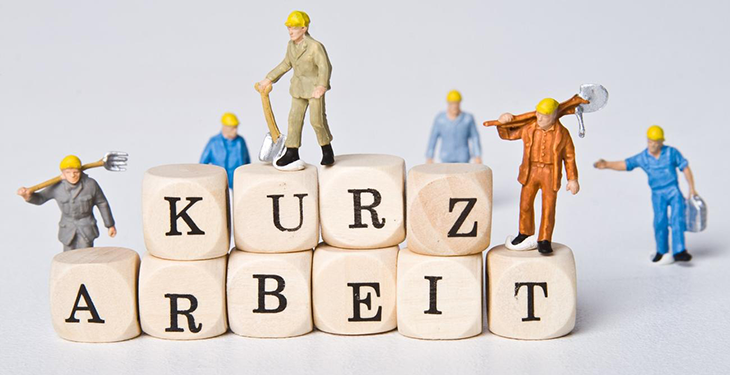
But most amazing is perhaps Europe – despite massive number of Covid-related casualties and long lockdowns leading to a steep contraction in the EU economy, there has been insignificant job loss (unemployment rate in the UK is around 4% in May and around 5.8% in Germany). This is primarily because all the major European countries (and this time the UK too) deployed their state-funded payroll-protection schemes (like Germany’s famous Kurzarbeit, whereby the government pays 2/3 of an individual’s salary), helping distressed companies to survive without cutting jobs. 

Saturday, June 13, 2020

Pandemic and Your Portfolio


Over the last two months or so, I have got so many distress calls from friends and family. Most of them were rudely awakened from their long investment slumber by the recent bloodbath on Dalal Street. And what I saw left me absolutely stunned – most of my friends are actually throwing their heard-earned money down the drain. Worst still, they do not even realize how they are jeopardizing their future.

Loss and Loss Statement 
I realized that the general investment profile of my friends is somewhat like this:
- single largest investment in an apartment – either yet to get possession or got it recently and in both cases, the current market price is significantly below the purchase price
- have an NPS but never bothered to be proactive about it
- large amount in bank FDs (at least some return, who cares about inflation)
- bought multiple insurance/ULIPs for tax savings – never calculated the return
- and SIP!! Yes, SIP seems to be the sole key to our golden future (and don’t ask SIP goes to which fund, that my RM knows, if you want, I will get the details and send it to you)

I was horrified to find that so many Mutual Fund portfolios are today worth 10 to 30% less than even their invested sum. That simply means instead of earning any profit, an investment of 100 rupees is worth just 70 today!
Not only my friends have never bothered to look at this, most of them do not have a clear financial plan, linked to their life goals.

Plan First and Remember Inflation 
Forget your Relationship Manager and the agent recommended by your friend, please sit down and calculate what are your life goals (buying a house, higher education for children, retirement corpus) and how much money you need to achieve these goals today. Then you need to add inflation to it and that completely changes the equation. If you think you need Rs 20 lakh for your daughter’s higher education after 10 years, then at 5% annual inflation, you would actually require Rs 32 lakh plus!

Most of us today do not have the luxury of a life-long pension and we would at least like to maintain the present lifestyle. It is easy to find retirement calculators in the internet, please check it out today itself. Probably you would lose your sleep tonight but still I would say, most of you need this shock.

No More Lazy Returns 
Bank deposit rates are falling for quite some time now. Your FDs are going to earn hardly 6% now. Remember, here you need to subtract the inflation – so, again at an average of 5% annual inflation, your net income is just 1% (and yes, you have to pay tax on your interest income!!).
The government has further added to your woes just before the crisis by slashing small savings (Post Office schemes, GPF/PPF) rates. After a series of co-operative bank disasters and NBFC crisis, very few brave-hearts will venture into small banks or corporate deposits for 1% extra gains.

What You Simply Cannot Afford
  • to let your hard earned money idle in bank deposits, you actually do not earn anything
  • you need a huge sum to finance your retired life – don’t be casual about it
  • 77% of Indian investment goes to real estate. As an investment, it is illiquid with high transaction cost. Evidence shows that nobody makes money consistently in real estate. Buy a house to live and not as an investment.
  • don’t buy gold jewellery as an investment
  • never buy insurance for investment or tax savings, buy it for safety first
  • and most importantly, today you cannot simply afford to stay away from the stock market. So, I suggest you at least learn to track your investment.


What You Must Do
  • For a financially secured future for yourself and your family, get a qualified financial advisor immediately. An advisor, not an agent (a doctor, not a quack)
  • Identify your major life goals and then make an exhaustive investment plan with your advisor to achieve these goals
  • Investments that are secured, do not by nature, offer you higher return. So, government bonds and bank deposits are mainly for safety. GPF is slightly higher return and PPF too (but a long 15 years lock-in period).
  • For fixed income, debt funds (they invest in government and corporate bonds) are better and more tax-efficient. But remember, debt funds are supposed to give you conservative returns. If a debt fund is giving you higher return that means the risk is higher (I had to break the Franklin news to a friend, who did not have the faintest idea what sort of fund it was and why her money was there).
  • Apart from fixed income, invest a portion of your portfolio in gold ETFs/certificates.
  • But the major portion of your investment should always be in stocks. If someone had invested Rs 1 lakh in 1991 in Sensex, her investment would have become Rs 34.2 lakhs in 2017 (as against 11.2 in gold and 9.3 in debt).
  • Always modify fixed income-gold-stock allocation as per your age/risk profile. Similarly adjust your stock market allocation.


Equity Allocation:
  • invest in index ETFs (they mirror the composition of Sensex/Nifty – the same stocks in the same ratio) for in-line return (and far less cost).
  • For better return (but higher risk), select a few Small Cap funds (check past performance and keep a hawk-eye on monthly performance).
  • You also need to find a few stocks, which you can hold over a long term (10 years) to maximize your return. If you are rich enough, go for a PMS (Portfolio Management Service, minimum investment 25 lakhs, often higher) or select a few good funds with such holdings.
  • Your advisor should be able to decide the ratio of these three types of funds (plus debt fund and gold ETF), based on your risk profile.


These are just the basics. Unfortunately most of us never got to learn these. Sadly, your senior position in the government/corporate hierarchy or PhD in history or biotechnology cannot guarantee a financially secured future or a comfortable retired life. This crisis may have given you a real shock but I hope most of you wake up now and take charge.